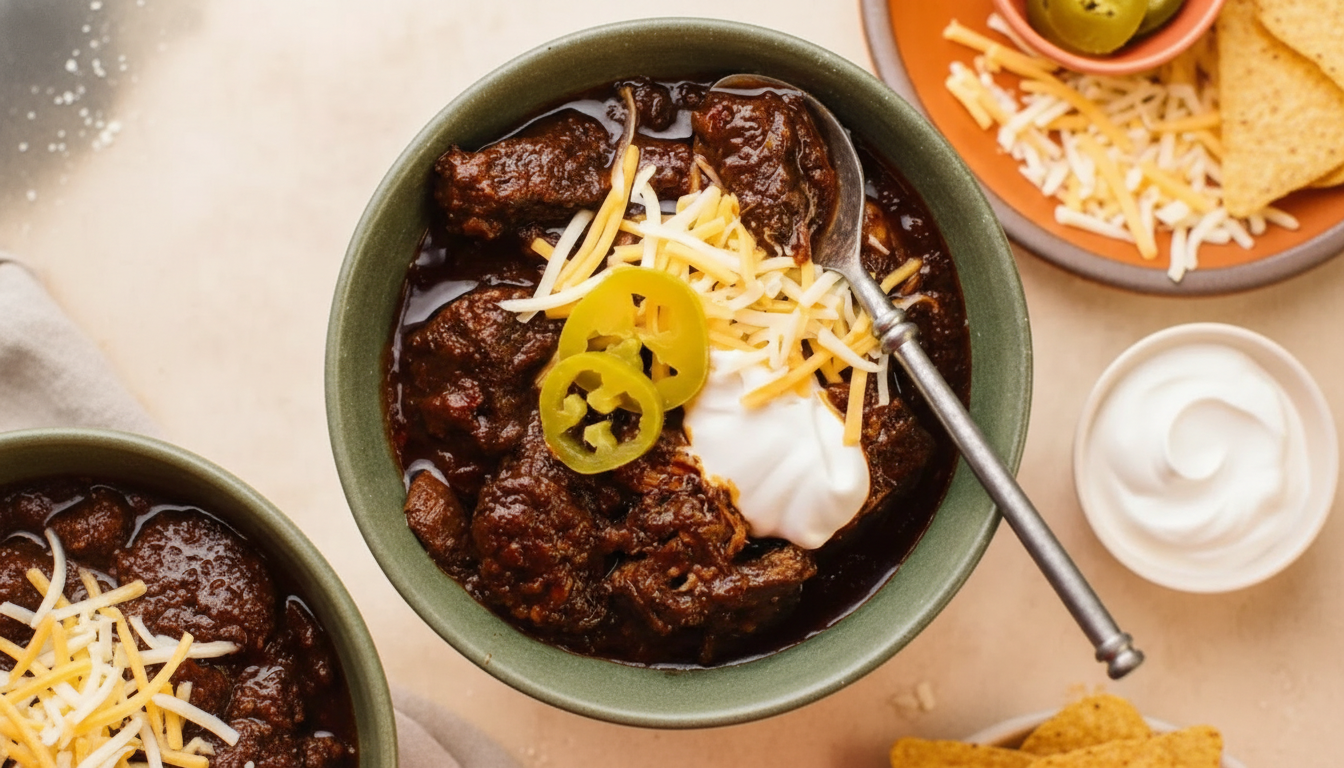
There are dishes that feed a crowd, and then there are dishes that define a culture, carry memories, and quietly demand respect every time you make them. Texas chili is firmly in the second category. No beans, no shortcuts, no apologies. Just beef, dried chiles, patience, and a deep commitment to doing things the right way. This is the recipe that took first place at a chili cook-off in Big Sur, competing against a lineup of seasoned contenders with oversized pots and unshakeable confidence. And it earned that win the old-fashioned way — through years of tasting, refining, and learning to trust the process.
Growing up in Texarkana, Texas, chili was a way of life from the first cold snap of fall straight through to spring. It was the Friday night dinner that signaled the weekend had arrived. It was the meal on the table before Halloween trick-or-treating, and it was the reliable, crowd-pleasing pot that could stretch to feed a room full of people without breaking a sweat. That deep familiarity with chili eventually grew into something more serious — a desire to understand not just how to make it, but how to make it exceptional.
The secret, as it turns out, is not about piling on more ingredients. It is about restraint, intention, and giving every single step the attention it deserves.
Building the Chili Sauce from Scratch
The foundation of this Texas chili is a homemade sauce built entirely from dried chiles, and this is where everything begins. Toasting the dried chiles in a dry pot wakes up their essential oils and intensifies their natural character. Rehydrating them in warm beef broth softens their texture and draws out every layer of flavor they have to offer. Blending them into a smooth, deeply colored sauce creates the backbone that the entire chili is built upon.
Using a combination of dried chile varieties gives you remarkable depth and complexity. Ancho chiles bring warmth and a gentle sweetness. Guajillos offer brightness and a slight tanginess. Pasillas contribute smokiness and an earthy richness. Together, they create a sauce that is far more nuanced than anything you could achieve with store-bought chili powder alone, though chili powder does still make an appearance here as a supporting player.
This is also the stage where white pepper earns its place. Unlike black pepper, which can sit assertively on top of a dish, white pepper has a softer, slightly fermented heat that weaves seamlessly into the sauce during the long simmer. It adds complexity without drawing attention to itself — exactly the kind of quiet detail that separates a good chili from a truly great one.
Browning the Beef Is Non-Negotiable
In a chili without beans, the beef is everything. It carries the dish, and it deserves to be treated accordingly. Browning the beef in batches over high heat is not a step you can rush or skip. Each batch needs space in the pan so that the meat sears rather than steams, developing a deep, dark crust that is packed with concentrated flavor. Those caramelized bits that stick to the bottom of the pot are not a problem — they are a gift. When the sauce hits the pan, they dissolve back into the chili and add another layer of savory richness to the final result.
The kielbasa also plays an important supporting role here. Sliced and browned alongside the aromatics, it renders its fat into the base of the chili and contributes a smoky, meaty depth that complements the beef without overpowering it. A can of dark lager beer and a full cup of strong brewed coffee round out the liquid base, adding bitterness, body, and an almost indefinable richness that makes people wonder what your secret ingredient is.
The Long, Rewarding Simmer
Once everything comes together in the pot — the blended chile sauce, the browned beef and sausage, the aromatics, the diced tomatoes, the spices, the coffee, and the remaining beef broth — the chili needs time. A slow, gentle simmer of around two hours allows the beef to become completely fork-tender, the sauce to thicken naturally, and all of the individual flavors to meld into something cohesive and deeply satisfying. This is not a dish you can rush. But the patience is absolutely worth it.
Ingredients
3 pounds boneless beef chuck roast trimmed and cut into 1/2-inch cubes, 2 tablespoons kosher salt divided, 1 teaspoon freshly ground black pepper, 6 dried chiles such as ancho, guajillo, pasilla or a mix with stems and seeds removed, 8 cloves garlic smashed, 4 cups beef broth divided plus more as needed, 2 tablespoons neutral oil, 1 medium yellow onion diced, 2 serrano peppers stemmed seeded and diced, 12 ounces beef kielbasa thinly sliced, 1 can (12 ounces) dark lager beer, 3 tablespoons tomato paste, 1 tablespoon dark brown sugar, 1 tablespoon cocoa powder, 1 tablespoon chili powder, 1 tablespoon Mexican oregano, 2 teaspoons smoked paprika, 1 teaspoon ground cumin, 1 teaspoon ground coriander, 1 teaspoon white pepper, 1 cup strong brewed coffee, 1 can (28 ounces) diced tomatoes, shredded cheddar cheese, sour cream, lime wedges, and corn chips for serving.
Instructions
Season the cubed beef with 1 tablespoon of salt and all of the black pepper and set aside. Toast the dried chiles in a large Dutch oven over medium heat until fragrant, about 2 minutes. Add the garlic and 2 cups of beef broth, bring to a boil, cook for 2 minutes, then remove from heat and let steep covered for 20 minutes. In the same pot, cook the onions and serrano peppers in oil until soft, then add the kielbasa and cook until browned. Remove and set aside. Blend the steeped chile mixture until completely smooth. Brown the beef in batches over high heat until deeply caramelized on all sides, then set aside and drain the fat. Deglaze the pot with a splash of beer, then add the tomato paste, brown sugar, cocoa powder, and all remaining spices along with the blended chile sauce. Stir and cook for 1 minute. Add the remaining beer, coffee, beef, sausage, onions, diced tomatoes, and remaining broth. Simmer uncovered over low heat for approximately 2 hours until the beef is tender and the chili is thick. Season with remaining salt and serve hot with your choice of toppings.
Leftovers keep well in an airtight container in the refrigerator for up to four days.