
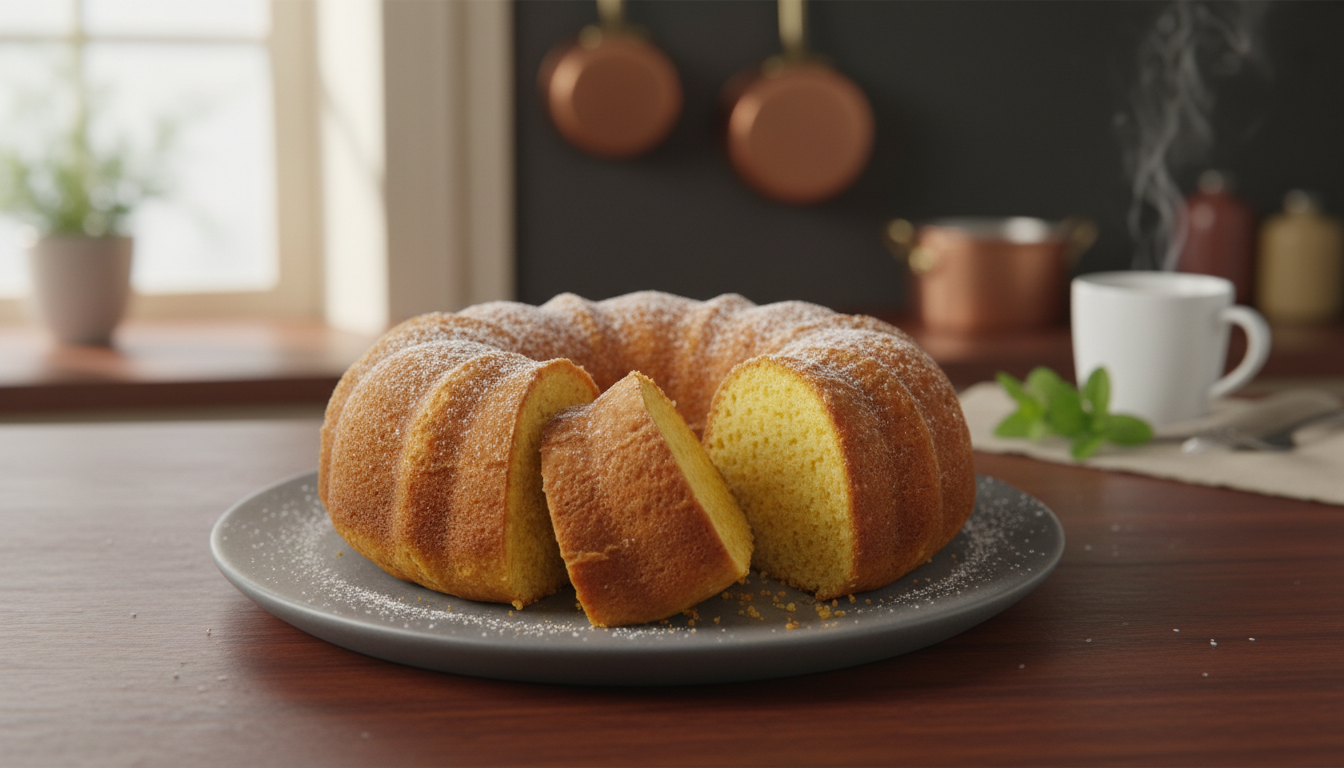
Every family has that one recipe — the one that shows up at every birthday, every holiday, every gathering without fail, the one that people specifically ask about before the event even happens to make sure it is going to be there. For this family, that recipe is wine cake. It requires just six ingredients, takes about ten minutes to assemble, and produces a bundt cake so consistently delicious and crowd-pleasing that it has earned a permanent and unchallenged spot in the family recipe rotation for decades.
The name might raise an eyebrow or two, particularly if you are imagining serving it to children, but there is no need for concern. The wine cooks off completely during baking, leaving behind only its flavor contribution — a warm, slightly fruity depth that works in harmony with the nutmeg and vanilla to create something genuinely special. What you are left with is a golden, close-crumbed cake with a beautifully caramelized outer crust, a tender and plush interior, and a flavor that reminds you unmistakably of a really good homemade doughnut. Dusted with a light snowfall of powdered sugar rather than frosted, it is not overly sweet, making it the kind of cake you can eat a generous slice of without feeling overwhelmed.
This is practical, unpretentious baking at its absolute finest.
Why a Doctored Cake Mix Is Brilliant
There is a long and proud tradition in American home baking of starting with a box of cake mix and making it taste like something far more homemade and impressive through the addition of a few carefully chosen ingredients. Wine cake belongs firmly in that tradition, and it is a perfect example of why the approach works so well.
The yellow cake mix provides the structural foundation — the flour, leavening, and basic flavoring already measured and combined. Instant vanilla pudding mix is the first key upgrade, and its impact on the finished cake is remarkable. The pudding mix adds moisture, richness, and a tender, velvety crumb that keeps the cake fresh and soft for days after baking. It also contributes body to the batter, giving the finished cake that close, plush texture that makes every bite so satisfying.
The dessert wine — a tawny port or darker sherry works beautifully — replaces the water or milk that a standard cake mix recipe would call for. This substitution is where the cake truly distinguishes itself from any ordinary box cake. The wine adds a complexity and warmth to the flavor that is difficult to identify precisely but impossible to ignore. It makes the cake taste genuinely homemade in a way that goes well beyond what the ingredient list might suggest.
The Nutmeg Factor
Nutmeg is one of those spices that divides opinion, and it is easy to understand why — used carelessly and in excess, it can overwhelm everything around it with a medicinal, almost harsh quality. But used correctly and in the right context, it is transformative. In this cake, a full teaspoon of ground nutmeg is the ingredient that most people cannot quite identify when they taste it but would immediately miss if it were absent. It gives the cake its gentle warmth, its subtle fragrance, and that distinctive flavor that reads so unmistakably as homemade doughnut. It is the secret that makes this cake taste nostalgic even the first time you try it.
The Oil Question
The original family recipe calls for a butter-flavored popcorn oil, which contributes a distinct buttery quality to the finished cake that regular neutral oil simply does not replicate in quite the same way. If you can find it, it is worth using for the sake of authenticity and flavor. If it is unavailable or you prefer a simpler pantry approach, any neutral oil such as canola or vegetable oil works perfectly well as a substitute. Adding a quarter teaspoon of butter extract to the batter alongside a neutral oil is an easy way to approximate the buttery character of the original without tracking down a specialty product.
The Caramelized Crust
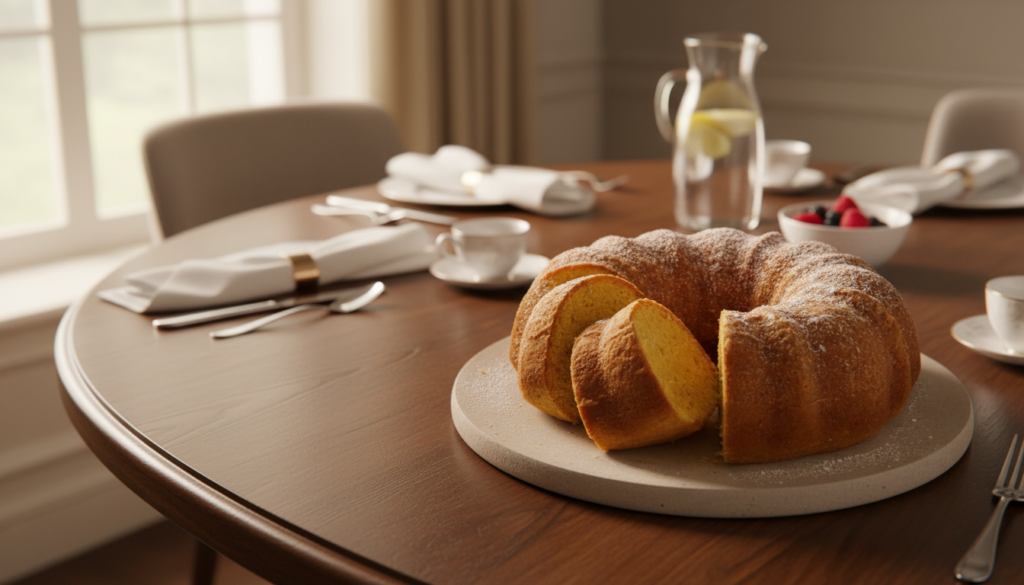
One of the most beloved features of this cake is the thin, deeply caramelized crust that forms on the outside during baking. While the interior of the cake is soft, golden, and yielding, the exterior develops a beautiful dark brown shell that adds both texture and a concentrated, slightly toffee-like flavor to every bite. Some people eat the crust and the interior together in each forkful. Others — as was the childhood ritual with this recipe — carefully carve out the soft golden center first, saving the caramelized crust for last as the most coveted part of the slice. Either approach is entirely valid and deeply enjoyable.
Properly greasing and flouring the bundt pan before the batter goes in is essential for ensuring that the caramelized crust releases cleanly after baking. Take the time to coat every surface of the pan thoroughly, paying particular attention to the center tube and any decorative grooves in the pan. A ten-minute rest after coming out of the oven before inverting onto a cooling rack gives the crust time to settle and ensures a clean release.
Ingredients
1 box yellow cake mix (15.25 ounces), 1 package instant vanilla pudding mix (3.4 ounces), 4 large eggs, 3/4 cup butter-flavored oil or neutral oil such as canola, 3/4 cup dessert wine such as tawny port or sherry, 1 teaspoon ground nutmeg, and powdered sugar for dusting if desired.
Instructions
Preheat the oven to 350°F. Grease and flour a 10 to 12-cup bundt pan thoroughly, making sure to coat all surfaces evenly. In a large bowl, combine the cake mix, pudding mix, eggs, oil, dessert wine, and nutmeg and mix until a smooth, cohesive batter forms with no dry streaks remaining. Scrape the batter into the prepared bundt pan and smooth the top into an even layer. Bake for 42 to 45 minutes until a cake tester or toothpick inserted into the center of one side of the bundt comes out completely clean. Remove from the oven and allow to cool in the pan for 10 minutes before inverting onto a wire cooling rack to cool completely. Dust generously with powdered sugar just before serving if desired.
The cake keeps at room temperature in an airtight container for up to three days, though in most households it disappears considerably faster than that.